Cockroach Janta Party Interview: Harshit Singh on a Movement for the Neglected
The Cockroach Janta Party interview with Harshit Singh is one of the most direct first-hand accounts of why this movement grew so fast. CIVICUS published it on its Lens platform, and Inter Press Service republished it on 10 August 2026. Its headline sums up the message: “The Cockroach Janta Party brings together everyone who has been neglected for years.” This guide explains the interview in plain words, separates what is reported from what is Singh’s own view, and links to the full original.
In this article
- Who is Harshit Singh and why does the interview matter?
- How the movement began, in Singh’s telling
- Why “neglected” is the key word
- Social media as the movement’s newsroom
- The government response and the 20 July march
- What has been achieved and what is still unmet
- What Singh says the movement needs next
- How to read this interview
- Frequently asked questions
- Sources
Who is Harshit Singh and why does the interview matter?
CIVICUS introduces Harshit Singh as a young activist, poet and storyteller who took part in the protests in Delhi. He is not the founder of the movement and he does not speak for it officially. That is exactly why the interview is useful: it shows how an ordinary participant, someone with a social media audience and a career to protect, understood what was happening. For the founder’s story, read our guide on who founded Cockroach Janta Party.
The timing also helps. The interview was published after the big march on 20 July and after the Education Minister resigned on 25 July, so Singh looks back on the whole arc instead of guessing what comes next.
How the movement began, in Singh’s telling
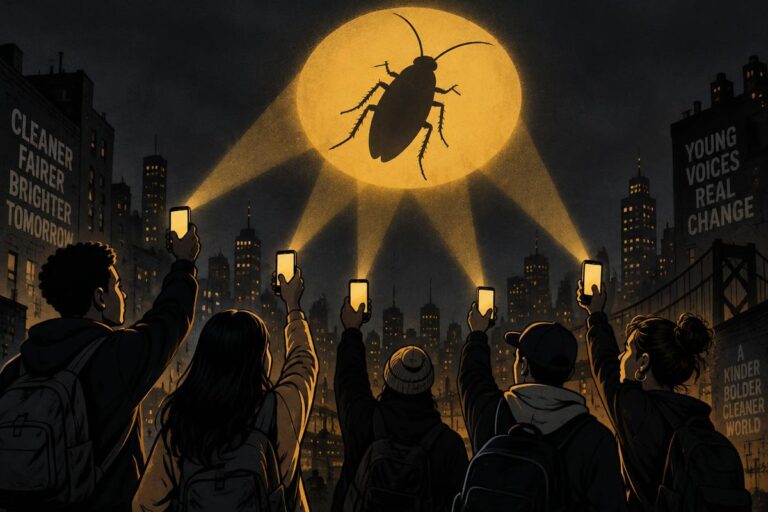
Singh traces the start to 15 May 2026, when Chief Justice Surya Kant said that young people who cannot find jobs and then turn to media, social media and activism to attack the system are like cockroaches. According to the interview, the Chief Justice corrected himself the next day and said he had meant only people entering the legal profession with fake degrees, but by then the hurt had spread. Abhijeet Dipke then posted asking what would happen if all the cockroaches came together, and within 24 hours he had set up an Instagram page, a website and a manifesto. The name was a parody of the ruling party.
Singh says the page had more than 20 million followers within weeks. That number is his claim and we have not verified it.
He argues the growth was so fast because the anger was already there. In the weeks before the remark, the national medical entrance exam paper leaked and the exam was cancelled for over two million students, who had spent years preparing. Singh says at least 21 students died by suicide, a figure we have not independently confirmed. For the exam story, see our explainer on the CJP exam reform charter and our timeline of the movement.
Why “neglected” is the key word
Singh says education and exams were the starting point, not the whole story. In his view, the movement gives a place to anyone who has felt ignored for years, whether students, the unemployed or others, to say they are frustrated and ask for change. He describes something that began as satire and turned into a national movement that nobody expected, including the person who started it.
He also pushes back on the idea that this is only a Gen Z story. Gen Z organised it, he says, but he saw every generation at the protests, along with people of different castes, gender identities and religions. There is no enrolment process and no entry test. Anyone who feels their basic rights are not respected can support it by turning up, posting or writing. Singh adds that many people came even though they did not back Dipke, disagreed with a spokesperson or disliked the cockroach name, because the movement felt bigger than any single person. If you want to know how joining works in practice, see our guide to Cockroach Janata Party members.
Social media as the movement’s newsroom
Singh says the movement started online and that most of what it has achieved rests on that. His argument is that mainstream television and print media in India are compromised and do not carry criticism of the government, so protesters became their own media. Anyone with a phone could record and post, he says, and it did not matter whether they had ten followers or five thousand. This is his opinion of the media, not a finding by CIVICUS. For the bigger picture, read how social media creates movements out of thin air.
He also describes a personal turning point. His income depends on social media and ticket sales, so he hesitated to speak against the government and worried his accounts could be taken down. He spoke anyway, and says many other artists did too. For Singh, if the mainstream media stays silent, art has to become the way people resist.
The government response and the 20 July march
Singh says the government responded very negatively, with people who protest or ask for their rights being labelled anti-national or terrorists. He says the movement stayed at Jantar Mantar in central Delhi for seven weeks and no official came to meet them. He also alleges that attempts were made to divide protesters, including by mocking queer people and spreading hatred between Hindus and Muslims, and says the unity held.
The march on 20 July, from Jantar Mantar towards Parliament, is the best-documented moment. CIVICUS notes in its introduction that police met the protest with pellet guns, teargas, batons and arrests. Singh says thousands of people of all ages joined with flowers, banners and posters, and calls the police handling illegal and unconstitutional. He says this turned public opinion and brought solidarity protests in cities, districts and small towns. He also says one young woman remains in intensive care on a ventilator, which we have not been able to verify.

The government’s side should be read too. Channel 4 News reported that the government says it has taken steps to prevent future paper leaks and will punish those responsible, and that the Chief Justice later said his remark was about fraudulent degrees and was not aimed at India’s youth.
What has been achieved and what is still unmet
Singh describes three main demands and where each one stood when the interview was published:
- Resignation of the Education Minister and action against those involved in the scam. Dharmendra Pradhan resigned on 25 July. Singh is glad, but says it should not have taken so long or so much violence, and that accountability is still missing.
- Compensation of 10 million rupees (1 crore) for each family that lost a child to suicide. Singh says families have received nothing, not even an apology.
- No legal action against people who took part in the protests. Singh says police have instead been tracing protesters and opening cases, and that Dipke and others have said another protest may be needed.
These are Singh’s statements about the status of the demands, so check for newer reports. Later events, such as the detention of the founder in October, are covered in our post on Abhijeet Dipke detained, then released.
What Singh says the movement needs next
His answer starts with fear. Singh says protesting in India is almost taboo because people expect repercussions, which makes organising difficult. He believes the government controls the security forces and investigative agencies, and that courts and media are compromised. These are his views, and CIVICUS says so clearly.
His asks are simple. Young people should keep showing up, artists should stop staying silent, people abroad should keep talking about the movement because that creates pressure, and the movement should hold on to its agenda because he expects attempts to dilute it.
How to read this interview
This is one participant’s view. CIVICUS states that the views in its interviews belong to the interviewee and that publishing one does not mean it endorses him or his organisations. Treat figures such as the 20 million followers, the number of deaths and the condition of injured protesters as claims until independent reporting confirms them.
The facts CIVICUS states itself in the introduction are the Chief Justice’s remark in May, over two million students having to resit their exams, the police action on 20 July and the minister’s resignation on 25 July. According to Wikipedia, the movement is not registered with the Election Commission of India. To go deeper, start with What Is Cockroach Janta Party? and our manifesto explainer.
Frequently asked questions
What is the Cockroach Janta Party interview about?
It is a CIVICUS Lens interview with activist and poet Harshit Singh about how the movement started, why it grew, how the government and police responded and which demands are still unmet.
Who is Harshit Singh?
CIVICUS describes him as a young activist, poet and storyteller who took part in the Delhi protests. He is not the founder of the movement.
What does the interview mean by everyone who has been neglected?
Singh says the movement is not only about exams. It gives anyone who has felt ignored for years a place to speak, whatever their age, caste, gender identity or religion.
Where can I read the original interview?
On CIVICUS Lens, linked in the sources below, and in the version republished by Inter Press Service. We are an independent, unofficial site and are not run by the movement; see our disclaimer.
Sources
- CIVICUS Lens: India, the Cockroach Janta Party interview with Harshit Singh (original interview)
- Inter Press Service: the same interview republished (10 August 2026)
- Channel 4 News: Inside the rise of India’s Cockroach Janta Party movement (22 July 2026)
- Wikipedia: Cockroach Janta Party
Checked on 25 October 2026 against the CIVICUS interview as republished by Inter Press Service.